
-0002.jpeg?resize=930&crop=930x504,0x575)
New scholarship invests in humanitarian engineering for healthier communities
A GHD Foundation scholarship tackling Pacific sanitation through humanitarian engineering.
A new scholarship, funded by the GHD foundation, is addressing critical sanitation challenges in the Pacific by investing in humanitarian engineering.
The field of humanitarian engineering harnesses engineering knowledge, skills and experience to benefit communities facing some of the world’s greatest challenges.
In the Faculty of Engineering, the humanitarian engineering program aims to address complex issues such as disaster resilience, climate adaptation and sustainable development in vulnerable and underserved regions through teaching and research.
Thanks to the generosity of the GHD Foundation, two new programs are strengthening our humanitarian engineering expertise by building long-term research capacity, international collaboration, and knowledge exchange:
- The GHD Foundation Academic Exchange Program, which supports visiting lecturers to participate in an exchange program at the University of Sydney to deepen their humanitarian engineering expertise
- The GHD Foundation PhD Scholarship, which supports a student from Fiji, Papua New Guinea or the Philippines to undertake research into humanitarian engineering that has a real-world impact on their communities.
“By supporting humanitarian engineering knowledge exchange in the Pacific, we’re backing local expertise to deliver practical, lasting impact for communities who need it most.” Chris Stevenson / Managing Director at the GHD Foundation
Advancing Pacific sanitation through research and leadership
The scholarship recipient, Joshua Bon Roco, commenced his studies at the University of Sydney in late 2025. A chemical engineer with substantial experience working in strategic business management, water and sustainability engineering in the Philippines, Joshua has led multiple socio-civic organisations whose work uses engineering to achieve the United Nations Sustainable Development Goals.
Working under the supervision of Dr Jacqueline Thomas, Dr Jiaying Li and Professor Stuart Kahn, Joshua’s PhD topic is titled ‘Assessing the faecal sludge treatment technologies suitable for communities in the Pacific’ and addresses critical sanitation challenges in the Pacific region.
The research looks at organic micropollutants from everyday goods such as pharmaceuticals, personal care and cleaning products that end up in septic tanks or latrines in rural Western Pacific communities, specifically in Fiji and the Philippines.
Studying how these substances move and build up in faecal sludge, will help identify where health and environmental risks are most likely to occur, according to Joshua.
“Ultimately, the knowledge can support communities, governments, and practitioners to design safer, more targeted sanitation systems, especially in underserved rural settings”, he said.
Committed to bringing knowledge home
For Joshua, the research carries a deep importance due to his personal experience. The scholarship will not only allow him to further specialisation in sanitation, but also enable him to eventually bring the knowledge gained during his PhD back to the Philippines.
“Current sanitation knowledge is skewed towards developed‑country settings, and the scholarship has revealed a renewed sense of purpose to shed light on the realities of underserved communities”, he said.
“This research matters deeply to me because it is not abstract: I see the faces of the people I hope to impact, drawn from my past engagements across the sanitation sector.”
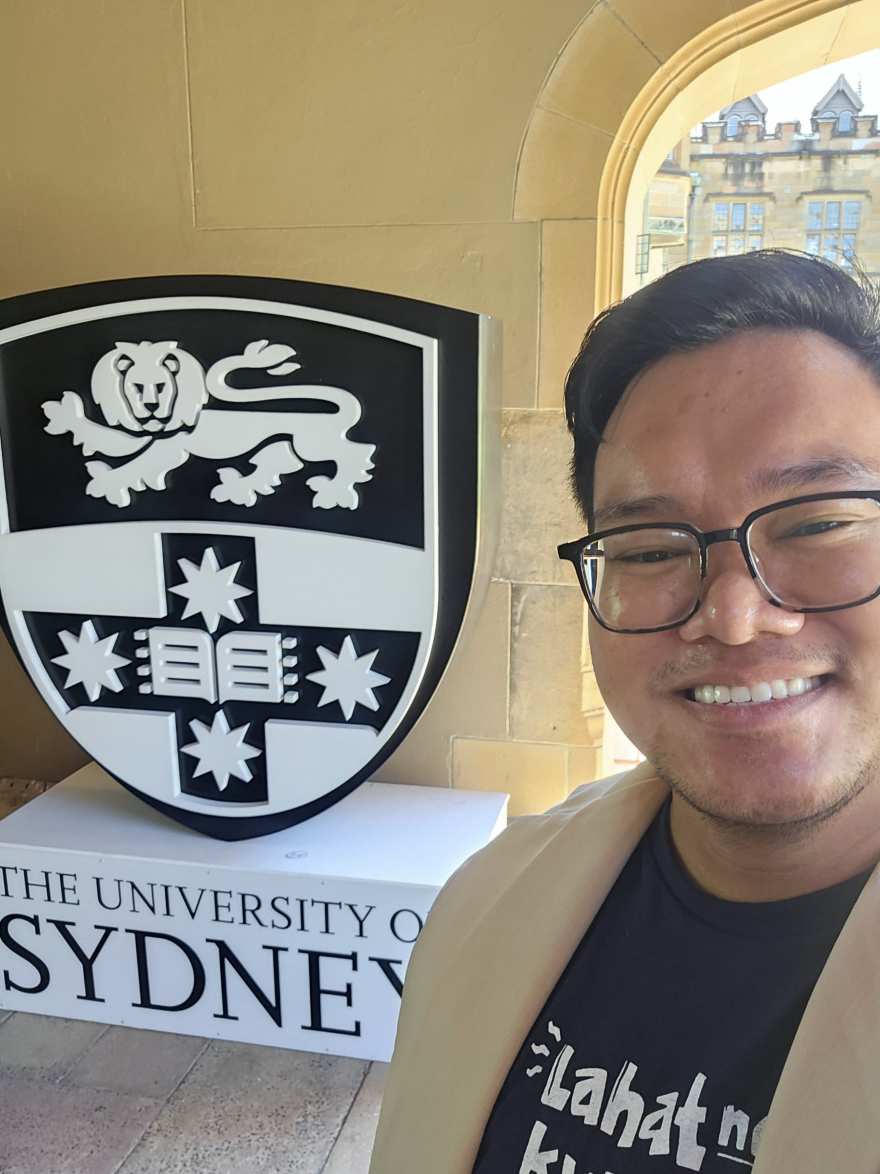
“Current sanitation knowledge is skewed towards developed country settings, and the scholarship has revealed a renewed sense of purpose to shed light on the realities of underserved communities” Joshua Bon Roco
Strengthening partnerships through knowledge exchange
Dr Jacqueline Thomas, one of Joshua’s academic supervisors and a senior lecturer in humanitarian engineering highlighted the importance of knowledge exchange between partner countries.
“The GHD Foundation funded academic exchange has been an amazing opportunity to share with academic institutions in our partner countries”, said Dr Thomas.
“The exchange has been welcomed and facilitated very meaningful discussions about improving engineering education in the Asia-Pacific.”
According to Chris Stevenson, Managing Director at the GHD Foundation, the scholarship marks an opportunity to drive meaningful change in under-resourced regions.
“By supporting humanitarian engineering knowledge exchange in the Pacific, we’re backing local expertise to deliver practical, lasting impact for communities who need it most.”
The GHD Foundation funds programs and organisations that help develop resilient communities, with a focus on equitable access to science, technology, engineering, the arts and mathematics education for a more diverse workforce of the future.